CHRISTIAN NEWS MAGAZINE FOR KERALA MALAYALEE CHRISTIANS FROM INDIA AROUND THE WORLD
ARTICLE - MALAYALAM

FEAST OF HOSANNA - TRIUMPHAL ENTRY AT BETHPHAGE
Duim\ s]cp\mÄ þ t_¯v^mKbnð \nópÅ hnPbbm{X
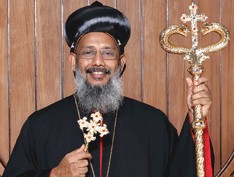
By H.G. Dr. Geevarghese Mar Theophilos Metropolitan
Metropolitan of Ahmedabad And Asst. Metropolitan of Mumbai Dioceses, Malankara Orthodox Church

AhÀ IgpX¡p«nsb tbiphns³d ASp¡ð sImïphóp X§fpsS hkv{Xw AXntòð C«p; Ah³ AXntòð Ibdn Ccpóp. At\IÀ X§fpsS hkv{Xw hgnbnð hncn¨p; aäp NneÀ ]d¼pIfnð \nóp Nnñns¡m¼p sh«n hgnbnð hnXdn. ap¼pw ]n¼pw \S¡póhÀ: tlmióm, IÀ¯mhns³d \ma¯nð hcpóh³ hmgv¯s¸«h³: hcpóXmb cmPyw, \½psS ]nXmhmb ZmhoZns³d cmPyw hmgv¯s¸SpamdmIs«; AXypóX§fnð tlmióm Fóp BÀ¯psImïncpóp. (aÀs¡mkv 11:7þ10)

henb t\m¼nse ]oUm\p`h hmc¯nte¡v IS¡póXn\p sXm«pap¼v hnPb¯nsâbpw kt´mj¯nsâbpw ASbmfamb Duim\ s]cp\mtfmsSbmWv \½psS henb Zn\§Ä Bcw`n¡póXv. F{_mb `mjbnð \nóv Dcp¯ncnª Duim\ Fó hm¡nsâ AÀ°w "Ct¸mÄ R§sf c£n¡' (Save us now) FómWv. {Ko¡nð, CXv ssZhs¯ kvXpXn¡pó Hcp BÀ¸phnfnbmbn D]tbmKn¡póp. AtXkabw kpdnbm\n `mjbnð AXnsâ AÀ°w "R§sf c£n¡q' FómWv. Duim\ s]cp\mfns\¡pdn¨pÅ Nne {lkz Nn´IÄ ]¦psh¡m\mWv Rm³ B{Kln¡póXv. al¯mbXpw hnPbIchpamb Hcp {]thi\w (triumphant entry) BWv \mw ChnsS ImWpóXv. tbcpitew ]«W¯nte¡pÅ IÀ¯mhnsâ {]thi\w Bbncpóp AXv. AXv Hcp km[mcW BtLmj¯nsâbpw hnPb bm{XbpsSbpw amXrIbnð Bbncpónñ. AXv hyXykvXamb Hcp {]thi\w Bbncpóp. hmkvXh¯nð, CXv {]mhN\nI hN\w \ndthÁpIbmbncpóp:

kotbm³ ]p{Xntb, D¨¯nð tLmjn¨m\µn¡; sbcpitew ]p{Xntb, BÀ¸nSpI! CXm, \ns³d cmPmhp \ns³d ASp¡ð hcpóp; Ah³ \oXnam\pw Pbimenbpw XmgvabpÅh\pw Bbn IgpX¸pd¯pw s]¬IgpXbpsS Ip«nbmb sNdpIgpX¸pd¯pw Ibdn hcpóp. (skJcymhp 9:9)

Cu {]hmNI hmIyw ChnsS AÀ°h¯mIpIbmbncpóp. CXneqsS \ap¡v a\knemIpóXv C{]ImcamWv:

  1. Hcp amXrIm cmPmhnsâ tLmjbm{X: Cu tLmjbm{X A[nImc¯nsâ Hcp amXrIbmbn hÀ¯n¡póp. sbdpitew \Kc¯nte¡pÅ tbiphnsâ {]thi\w temI¯n\v Hcp amXrIm cmPmhns\ ]cnNbs¸Sp¯póXmbncpóp. "\n§fpsS cmPmhv hcpóp' Fóv {]hmNI³ ]dbpóp. B cmPmhnsâ aqóp KpW§Ä ]cmaÀin¡póp: Ah³ \oXnam\mWv, Ah³ c£ \ðIpóp (aqe kpdnbm\nbnð Furkono Fómð "c£ \ðIpóh³' FómWv AÀ°am¡póXv), Ah³ FfnabpÅh\mWv.

  2. Akm[mcWambn, \ymbhpw \oXnbpapÅ Hcp cmPmhv hn\b\znX\mbn hcpóp: \oXnbpw \ymbhpw sImïphcpó Hcp cmPmhmWv tbip. Ah³ Hcp ]S¡pXncbpsS ]pd¯ñ, IgpXbpsS ]pd¯mWv kôcn¡póXv, Ah³ kam[m\t¯msS hcpó, Xsâ P\¯n\v c£ \ðIpó, \½psS lrZb§fnð Hcp A[n]\mbn hcpó FfnabpÅ cmPmhmsWóv kqNn¸n¡póp.

hmKvZ¯ cmPmhmb tbip BXy´nIambn \½psS c£ Dd¸m¡pó Ipcninte¡pÅ bm{XbpsS XpS¡amW,v Cu hnPbIcamb {]thi\w. cmP\oXn HgpIpó \Zn t]mse ØncXbpÅXpw, XSbm\mhm¯Xpw, kar²hpambncn¡Wsaóv Btamkv {]hmNI³ Duón¸dbpóp. "Fómð \ymbhn[n shÅw t]msebpw \oXn häm¯ tXmSp t]msebpw IhnsªmgpIs«;' (Btamkv 5:24) ssZhcmPy¯nð, `cWhpw `cWm[nImcnbpw \oXnam\pw kZvKpWapÅhcpamWv. ssZhw Ft¸mgpw \oXntbmsSbpw IpÁclnXambpw {]hÀ¯n¡póXv \mw ImWpóp. Hcp ]c¼cmKX cmPy¯v, kz´w kpc£¡mbn Imhð¡mcmð NpÁs¸« cmPm¡òmscbmWv \mw ImWpóXv. kz´w B{Kl§Ä¡pw CjvS§Ä¡pw A\pkrXambn {]hÀ¯n¡pó \nehnse `cWm[nImcnIsfbmWv \mw Iïn«pÅXv. Fómð Cu cmPmhv (tbip) \oXnbpÅh\pw, kuay\pw, temI¯nsâ kpc£bv¡pw c£bv¡pw Xsó¯só kaÀ¸n¨h\pw Bbncpóp. Znhy\oXnbpw euIoI `cWm[nImcnIfpw X½nepÅ hyXymks¯¡pdn¨v \mw Ft¸mgpw t_m[hmòmcmbncn¡Ww. kz´w kpc£bv¡v ap³KW\ \ðIpó `uanI cmPm¡òmcnð \nóv hyXykvX\mbn, ssZhcmPy¯nsâ cmPmhv \oXn, hn\bw, Ffna, temI¯nsâ c£bv¡mbn XymKw Fónhbmð khntijXbpÅh\mWv. AXn\mð, Cós¯ t\XrXz¯n\v {InkvXp BXy´nI amXrIbpw DZmlcWhpw BWv. cmjv{S§Ä¡pw `cWm[nIÄ¡pw am{Xañ, k`bv¡pw, CShIbv¡pw, `h\¯n\pw, aÁp kwLS\IÄ¡psañmw tbip cmPmhv amXrIbmIpóp. tkzÑm[n]Xy {]hWX {]tbmKn¡póXn\p ]Icw, Cu cmPmhv [mÀ½nI\pw NpÁpapÅhÀ¡v Ffp¸¯nð F¯mhpóh\pambncpóp.

Cu `mK¯nð \mw hmbn¡pó asÁmcp kw`hw IgpXsb tbiphnsâ ASp¡ð sImïphcpóXmWv. Cu kw`h¯nsâ hniZmwi§Ä C{]ImcamWv:

\n§Ä¡p FXnscbpff {Kma¯nð sNñphn³; AXnð ISómð DSs\ Bcpw Hcn¡epw Ibdo«nñm¯ Hcp IgpX¡p«nsb sI«nbncn¡póXp ImWpw; AXns\ Agn¨p sImïphcphn³. CXp sN¿póXp F´p Fóp Bsc¦nepw \n§tfmSp tNmZn¨mð IÀ¯mhnóp CXns\s¡mïp Bhiyw Dïp Fóp ]dhn³; Ah³ £W¯nð AXns\ Ct§m«p Ab¡pw Fóp ]dªp. AhÀ t]mbn sXcphnð ]pd¯p hmXnð¡ð IgpX¡p«nsb sI«nbncn¡póXp Iïp AXns\ Agn¨p. AhnsS \nóhcnð NneÀ AhtcmSp: \n§Ä IgpX¡p«nsb Agn¡póXp F´p Fóp tNmZn¨p. tbip Iev]n¨Xpt]mse AhÀ AhtcmSp ]dªp; AhÀ Ahsc hn«b¨p. AhÀ IgpX¡p«nsb tbiphns³d ASp¡ð sImïphóp X§fpsS hkv{Xw AXntòð C«p; Ah³ AXntòð Ibdn Ccpóp. (aÀs¡mkv 11:2þ7)

Cu thZ`mKw {]XoImßIambn t\m¡pIbmsW¦nð, \½Ä Cu IgpXbpsS Øm\¯mtWm Fóv ]cnKWn¡Ww. IgpX sI«s¸«Xmbncpóp. Cu temI¯nð hnhn[ hnjb§fnð IpSp§nt¸mb Hcp IgpXbmbn \ap¡v kzbw ImWm³ Ignbpw. tbip sI«s¸« IgpXsb IïXpt]mse, ssZhw \n§tfbpw Ftóbpw ImWpóp, ImcWw ssZh¯nsâ ZrjvSnbnð \nóv adªncn¡m³ BÀ¡pw Ignbnñ. \½Ä FhnsS adªmepw ssZhw \s½ ImWpóp. BZmw Xsó¯s\ ad¨p. ]s£ ssZhw Ahs\ Iïp. k¡mbn ac¯nð Hfn¨p. ]s£ tbip Ahs\ Iïp. \½psS sI«pIfpw _Ô\§fpw Adnbpó ssZhw Ft¸mgpw \s½ ImWpóp. B ssZhw \t½mSv Bhiys¸SpóXv: "\n§fpsS sI«pIÄ Agn¡pI, \n§fpsS _Ô\§Ä kzX{´am¡pI!'

emkdns\ acn¨hcnð \nóv DbÀ¸n¨tijw NpÁpw \nóhtcmSv "Ahs³d sI«p Agn¸n³; Ah³ t]mIs«' Fóp tbip ]dªp. tbip Ahs\ Xsâ ASpt¯¡v sImïphcm³ B{Kln¨p. IgpX¡p«nsb sImïphcm³ Ab¨htcmSv tbip ]dbpóp: "Bsc¦nepw \n§tfmSp tNmZn¨mð IÀ¯mhnóp CXns\s¡mïp Bhiyw Dïp Fóp ]dhn³'. IgpXbpsS Øm\¯pÅ Ftóbpw \n§tfbpw IÀ¯mhn\v Bhiyapïv. ASn¨aÀ¯s¸«htcmSpw, \ncmicmbhtcmSpw, IjvSs¸SpóhtcmSpw, _p²nap«nembhtcmSpw, Dt]£n¡s¸«htcmSpw tbip ]dbpóp: F\n¡p \n§sf Bhiyapïv. Cu tImhÀIgpX \n§fpw Rm\pw Bbncn¡s«. ssZhw hkn¡pó tImhÀIgpXbmbn \ap¡v amdmw.

BXy´nIambn, bn{kmtbensâ ]pXnb cmPmhns\ kzoIcn¡m\pw kzmKXw sN¿m\pw km[mcW¡mcmb BfpIÄ tlmim\ tLmjbm{Xbnð ]¦ptNcpóXv \mw ImWpóp. AXpt]mse, IÀ¯mhmb tbiphnsâ {]thi\w kzoIcn¡m\pw, km²yamIm\pw \½psS lrZb§fpsS hmXnepIsf \ap¡p Xpd¡mw. k¦oÀ¯\¡mc³ ]dbpóXpt]mse: "hmXnepIsf, \n§fpsS XeIsf DbÀ¯phn³; ]tïbpff IXIpIsf, DbÀóncn¸n³; alXz¯ns³d cmPmhp {]thin¡s«. alXz¯ns³d cmPmhp BÀ? _ehm\pw hoc\pamb btlmh, bp²hoc\mb btlmh Xtó. hmXnepIsf, \n§fpsS XeIÄ DbÀ¯phn³; alXz¯ns³d cmPmhp {]thin¡s«. alXz¯ns³d cmPmhp BÀ? ssk\y§fpsS btlmh Xtó; Ah\mIpóp alXz¯ns³d cmPmhp.' (k¦oÀ¯\§Ä 24:7þ10) alXzapÅ cmPmhns\ \½psS lrZb¯nte¡v kzoIcn¸m³ \mw \½psS lrZb§Ä Xpd¡Ww, \nÀ½eambn Pohn¡pIbpw XS椀 \o¡pIbpw thWw. Duim\ ]mSnb inip¡sft¸mse, tbiphn\mbn \½psS lrZb§sf Hcp¡póXn\v Hópw \s½ XSbcpXv. \½psS c£I\mb cmPmhns\ kzmKXw sN¿póXnsâ Cu t\«¯nepw ]qÀ¯oIcW¯nepw ssZhw \s½sbñmw klmbn¡s«!

FEAST OF HOSANNA - TRIUMPHAL ENTRY AT BETHPHAGE

They brought the colt to Jesus and put their coats on it; and He sat on it. And many spread their coats in the road, and others {spread} leafy branches which they had cut from the fields. Those who went in front and those who followed were shouting: "Hosanna! Blessed is He Who comes in the name of the Lord; Blessed is the coming kingdom of our father David; Hosanna in the highest!" (St. Mark 11:7-10)

Just before we enter the Passion week of Great Lent, we start with the Feast of Hosanna (Palm Sunday), a feast that signifies victory and joy. The word "Hosanna" (derived from Hebrew Hosha-na) means "Save us now". In Greek, it is used as a shout of praise to God, while in Syriac, it means "Save us". I would like to share a few brief thoughts regarding the Feast of Hosanna. We see here a great, triumphant entry—a great entrance of God. Jesus is entering the city of Jerusalem during the Feast of Hosanna. This was a different kind of entrance compared to the typical pattern of a triumphant celebration. It was, in fact, fulfilling the prophetic word:

Rejoice greatly, O daughter of Zion; shout, O daughter of Jerusalem: behold, thy King cometh unto thee: He is just, and having salvation; lowly, and riding upon an ass, and upon a colt the foal of an ass.” (Zechariah 9:9)

This prophetic word is being fulfilled. Here is what we understand by this:

  1. The Procession of a Model King: This procession serves as a model of authority. Entry of Jesus to City of Jerusalen was an introduction of a model king to the world. The prophet says, "Your king comes," and provides three attributes of that king: He is righteous, He is "having salvation" (in the original Syriac, Furkono means "the one who brings salvation"), and He is humble.

  2. An unusual just and righteous King: Jesus is a king who brings righteousness and justice. He rides on a donkey, not a warhorse, signaling that He is a humble king Who comes in peace, bringing salvation to His people and as a King in our heart.

This triumphal entry is the beginning of the journey to the cross, where Jesus, the promised King, ultimately secures our salvation.

Prophet Amos emphasizes that justice must be consistent, unstoppable, and abundant, like a flowing river. "But let judgment run down as waters, and righteousness as a mighty stream." (Amos 5:24) In the Kingdom of God, both the reign and the ruler are just and righteous. We always see God acting justly and righteously, and we also see a King who brings salvation. In a conventional kingdom, we see kings surrounded by guards for their own safety. We also see kings and current rulers acting according to their own wishes and desires. However, this King [Jesus] was just, and He dedicated Himself to the safety and salvation of the world. This King was humble. These are the qualities we see in Him. We must always become aware of the variance with Divine Justice vs. that of worldly rulers: Unlike earthly kings who prioritize their own safety, the King of God's Kingdom is characterized by righteousness, humility, and sacrificing for the salvation of the world. Therefore, Christ serves as the ultimate example and a model for leadership today. King Jesus serves as the prototypical model, not merely for nations and rulers, but for the Church, the parish, the home, and any other organization or groups. Rather than practicing authoritarian domination, this King was modest and accessible to those around Him.

Another event we read about in this passage is the bringing of the donkey to Jesus. The details of this event are as follows:

"And saith unto them, Go your way into the village over against you: and as soon as ye be entered into it, ye shall find a colt tied, whereon never man sat; loose him, and bring [him]. And if any man say unto you, Why do ye this? say ye that the Lord hath need of him; and straightway he will send him hither. And they went their way, and found the colt tied by the door without in a place where two ways met; and they loose him. And certain of them that stood there said unto them, What do ye, loosing the colt? And they said unto them even as Jesus had commanded: and they let them go. And they brought the colt to Jesus, and cast their garments on him; and he sat upon him." (St. Mark 11:2-7)

If we look at this passage symbolically, we should consider whether we are in the position of this donkey. The donkey was tied up. We can view ourselves as a tied donkey entangled in various issues of this world. Just as the donkey was seen by Jesus, God sees you and me, as we cannot be hidden from the sight of God. Wherever we are hidden, God sees us. Adam hid himself, but God saw him. Zacchaeus hid on the tree, but Jesus saw him. God is the one who sees us always; the God who knows our ties and entanglements. That God demands of us: "Remove your ties, free your bondages."

After Lazarus was raised from the dead, Jesus told the people to unbind him and let him go. Jesus wanted him near Him. Jesus tells those sent to get the mule to say to the villagers, "The Lord has need of it". The Lord is in need of you and me, who are in the place of the donkey. To those who are downtrodden, those who are desperate, those who are suffering, those who are in hardship, and those who are abandoned, Jesus says, "I am in need of you." Let this mule be you and me. Let us become the mule upon which God dwells.

Ultimately, we see ordinary people earnestly joining the Hosanna procession to greet and welcome the new King of Israel. Similarly, we should open the mansion of our hearts to receive and embrace the entry of the Lord Jesus Christ. As the Psalmist says: "Lift up your heads, O gates, and be lifted up, O ancient doors, that the King of glory may come in! Who is this King of glory? The Lord of hosts, He is the King of glory" (Psalm 24:7-10). We must open our hearts to receive the glorious King into our lives, living purely and removing obstacles. Like the children at Hosanna, nothing should hold us back from moving forward boldly to prepare our hearts for Jesus. May God help us all in this achievement and accomplishment of welcoming our Savior King.

(If you liked the Article please share it with your friends, subscribe for Updates or Send your Feedback clicking button below]
FeedbackSubscribe for EMail Updates / Send Feedback

Series 4 - Easter Sunday Series 2 - Feast of Pesaha
MORE ARTICLES OF THE SAME AUTHOR


A KIND NOTE TO BLESSED READERS
Now most of the Articles are converted to read on your Mobile Phone, rest are in process. If you would like to read Light of Life Articles frequently please add an ICON on your Home Screen as per the steps given below. (Please do it only once to avoid multiple icons on your home screen)

FOR ANDROID
  1. Open Chrome Browser
  2. Write URL LightofLife.com on URL Bar
  3. Tap Browser's menu icon (three dots or the hamburger menu three line on right-top).
  4. Select "Add to Home Screen" or Add Page To -> Home Screen"
  5. Name the Shortcut as "Light of Life" or "LOL"
  6. Tap "Add to place the Icon on your Home Screen.
FOR IOS (IPHONE)
  1. Open Safari (or your preferred browser).
  2. Write URL LightofLife.com on URL Bar.
  3. Tap the Share button (a square with an arrow pointing up).
  4. Scroll down and select "Add to Home Screen"
  5. Give the link a name for your Home scrren Icon "Light of Life" or "LOL"
  6. Tap "Add" in the upper-right corner to confirn
SITE MAP

ARTICLES AND SERMONS OF CHURCH FATHERS

ARTICLES AND SERMONS OF OTHER AUTHORS

ARTICLES IN CHRISTIAN EDUCATION OF EARLY CENTURIES

SHORT BIOGRAPHIES OF CHURCH FATHERS


Back Home Top
INDIAN CHRISTIAN WEB DIRECTORY [LINKS]
[ ECUMENICAL ] [ ORTHODOX ] [ MARTHOMA ] [ JACOBITE ] [ CATHOLIC ] [ CSI ] [ ORGANIZATIONS ] [ NEWS ] [ MALAYALAM ]
THE CHRISTIAN
LIGHT OF LIFE