CHRISTIAN NEWS MAGAZINE FOR KERALA MALAYALEE CHRISTIANS FROM INDIA AROUND THE WORLD
ARTICLE - MALAYALAM

FEAST OF PESAHA - CULMINATION OF OLD PESAHA COMMENCED IN EGYPT
s]klm s]cp\mÄ þ an{kbnanð Bcw`n¨ ]gb s]klmbpsS ]qÀ¯oIcWw
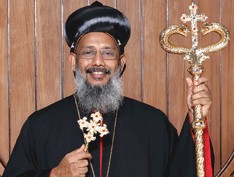
By H.G. Dr. Geevarghese Mar Theophilos Metropolitan
Metropolitan of Ahmedabad And Asst. Metropolitan of Mumbai Dioceses, Malankara Orthodox Church

AhÀ `£n¡pt¼mÄ Ah³ A¸w FSp¯p hmgv¯n \pdp¡n AhÀ¡p sImSp¯p: hm§phn³; CXp Fs³d icocw Fóp ]dªp. ]nsó ]m\]m{Xw FSp¯p kvtXm{Xw sNmñn AhÀ¡p sImSp¯p; Fñmhcpw AXnð \nóp IpSn¨p; CXp At\IÀ¡pthïn sNmcnbpóXmbn \nba¯nópff Fs³d càw. (aÀs¡mkv 14:22þ24)

IpªmSnsâ cà¯mð ]gb\nba s]klm bn{kmtbð P\Xbv¡v kwlmcI\nð\nóv imcocnI kwc£Ww \ðIn. t\scadn¨v, ]pXnb\nba s]klm hnizmknIÄ¡v ]m]¯nð \nópw acW¯nð \nópw tamN\w \ðIpóp. \ngembncpóXv s]mcpfmbn amdnb Hcp Znhk¯nsâ HmÀ½bmWv s]klm Znhkw \mw sImïmSpóXv. ]gb\nba¯nse ap³\ngensâ (Hcp HmÀ½) BXy´nI ]qÀ¯oIcWambn«mWv ]pXnb\nba s]klmsb \mw ImWpóXv. an{kbnw apXð amfnIapdnbnðhsc am{Xw DïmbncpóXmb clkyw BWv ]gb s]klm. ]gbXv Hcp ap³\ngembncpót¸mÄ ]pXnbXv bmYmÀ°yamWv. an{kbnanse arK¯nsâ _en ssZh¯nsâ IpªmSnsâ (IÀ¯mhmb tbip{InkvXp) amwkhpw càhpw D]tbmKn¨v amÁn Øm]n¡s¸«p. CXv shdpsamcp {]XoItam, D]atbm, D]am\tam Añ; GZ³ tXm«¯nðsh¨v a®v Ipg¨v Dïm¡nb cq]s¯ IÀ¯mhnsâ Pohizmkw F{]Imcw Poh\pÅ icocam¡n¯oÀ¯pthm A{]Imcw, ]cnip²mßmhnsâ Bhmk¯neqsS, A¸hpw hoªpw bYmÀ°¯nð tbip{InkvXphnsâ icochpw càhpambn ]cnhÀ¯\w sN¿s¸Spóp, AXv hnip² IpÀºm\bnð \ap¡v e`n¡póp. ]pXnb s]klm Hcp cq]Iañ, adn¨v IqZmibnð kzoIcn¡s¸Spó tbiphnsâ icoc¯nsâbpw cà¯nsâbpw bYmÀ° kmón²yamWv.

tbip ssZhambncpót¸mÄ F{]Imcw a\pjy\mbn Cu temI¯nð ImWs¸«pthm AtXt]mse Xsó, taibnð A¸hpw hoªpambn \ap¡v ImWs¸Spópsh¦nepw AXv IÀ¯mhnsâ Xncp icoc cà§fmbn amÁs¸Spó henb AÛpXw; Mystical Supper FómWv \mw CXns\ ]dbpóXv. clkymßIamb A¯mgw (Mystical Supper) FóXv s]klm hymgmgvN ip{iqjbnð ]e {]mhiyw \mw BhÀ¯n¨v sNmñpópïv. A§s\ ]gb DS¼Sn \o¡w sNbvXv sImïv s]klmbneqsS \ap¡v Ct¸mÄ ]pXnb Hcp \nbaw e`n¨ncn¡póp. CXv BhÀ¯n¡m\mIm¯ Hcp bmKamWv. an{kbnanð \nóv amfnIapdn hscbpÅ Imebfhnð arK§fpsS càw D]tbmKn¨v arK_enIÄ BhÀ¯n¨v BhÀ¯n¨v AÀ¸n¨ncpóp. Fómð amfnIapdnbnse _en BhÀ¯n¡m\mhm¯XmWv. ImcWw AXv Hcn¡ð am{Xta \Són«pÅp. Fñm a\pjy hÀ¤¯n\pambn, temImhkm\w hsc, AXv Fótó¡pambn, Hcn¡ð am{Xambn ]qÀ¯nIcn¡s¸«p. hnip² ]utemkv At¸mkvXe³ F{_mb teJ\¯nð CXv hniZoIcn¡pópïv. "CXm, Rm³ \ns³d Cãw sNbvhm³ hcpóp Fóp ]dªpsImïp Ah³ cïmat¯Xns\ Øm]n¸m³ Hómat¯Xns\ \o¡n¡fbpóp. B Cã¯nð \mw tbip{InkvXp Hcn¡embn Ign¨ icocbmK¯mð hnip²oIcn¡s¸«ncn¡póp.' (F{_mbÀ 10:9þ10) Hcn¡embn \ap¡v `ctað¸n¡s¸« hnip² _en, AXp hoïpw \½psS ssZ\´n\ PohnX¯nð IpÀºm\bneqsS ]p\À Bhnjv¡cn¡s¸SpIbmWv.

AXpt]mse Xsó, Cu _en ]m]§fpsS tamN\¯n\pw, IS§fpsS ]cnlmc¯n\pw, PohnX¯nsâ ]pXp¡en\pambn X¼pcm³ \ðInbn«pÅXmWv. ]gb\nba¯nð, ]m]tamN\¯n\mbn P\w càcq£nXamb bmK§Ä AÀ¸n¨p. Fómð ]pXnb\nba¯nð BZya\pjy\mb BZmansâ A\pkcWt¡SneqsS a\pjycminbnð {]thin¨ ]m]w ssZh]p{X\mb tbip{InkvXphnsâ A\pkcW¯mð \o¡w sN¿s¸Spóp. A§s\ Cu bmKw BZmayIpe¯nsâ IS¨o«ns\ Iodn¡fbpóp. AXv tIhew Hcp a\pjy\pthïn am{Xañ, a\pjyhÀ¤w apgph\pw thïnbpÅXmWv.

Cu _enbneqsS IpªmSnsâ cà¯mð \mw IgpIn ip²oIcn¡s¸Spóp. Cu _en \s½ \nXyPoh\nte¡v \bn¡póp. Fómð ]gb\nba _en \nXyPoh³ \ðIpóXñmbncpóp. GZ\nð BZman\v hne¡s¸« Pohhr£¯nsâ ^eamWv amfnI apdnbnðsh¨v injyòmÀ¡v \ðInbXv. Dð¸¯n 3:22þ24 A\pkcn¨v, a\pjy³ ssI\o«n Pohhr£¯ns³d ^ewIqsS ]dn¨p Xnóp Ftó¡pw Pohn¸m³ kwKXn hcmXncn¸m³ btlmhbmb ssZhw Ahs\ GsZ³tXm«¯nð\nóp ]pd¯m¡n Fóp ]dbpóp. B Pohhr£¯nsâ ^eamWv Cóp \ap¡v \ðIs¸SpóXv. Fsâ icocw `£n¡bpw Fsâ càw ]m\w sN¿pIbpw sN¿póh³ Ftó¡pw Pohn¡pw Fóv \½psS X¼pcm³ \t½mSv Acpfns¨¿póp.

hnip² IpÀºm\ ssZhhpambn \s½ sFIys¸Sp¯pIbpw i{XpXbnð \nóv \s½ AIÁpIbpw sN¿póp. ]nXmhmb ssZhhpambn a\pjys\ tbmPn¸n¨ _enbmIpóp CXv. i{XpXz¯nsâ thensb AXv s]mfn¨p Ifbpóp. ssZhhpw a\pjy\pw CSbnepÅ AXnÀ¯n CñmXm¡póp. Cu _enbneqsS, ssZhw \½nð hkn¡m³ Cd§nhcpóp. \mw ssZhhpambn IeÀ¯s¸Spóp, ebn¡póp. Cu _en \s½ kzÀ¤¯nsâ ]¦mfnIfm¡póp. CXv ssZh¯nsâ henb ImcpWyamWv.

Cu _en \s½ ssZhcmPy¯nte¡v _Ôn¸n¡pó Hcp ]mehpw, \½psS i{Xp¡fpsS iànbnð \nóv \s½ kpc£nXam¡pó IhNhpamWv. Cu _enbnð ]s¦Sp¡pó BÀ¡pw Hcn¡epw eÖn¡m³ ImcWanñ. k`bpsS ]nXm¡òmÀ {InkvXphns\ Akm[mcW\mb aWhmf\mbn (An exceptional Bridegroom) Xncn¨dnbpóp. Hcp aWhm«nbv¡vv hnhml hncpómbn Xsâ icochpw càhpw \ðInb Hcp aWhmf\pw temI¯v Cñ þ AXv km²yhpañ. Fómð tbip Xsâ amwkhpw càhpw Xsâ h[phn\v `£Wambn \ðIn. Xsâ càw kv{Xo[\ambn \ðInb Hcp aWhmf\nñ: Fómð {InkvXp AXp sNbvXp. Xsâ h[phn\v adphnebmbn Xsâ Poh³ \ðInb Hcp aWhmf\pw temI¯nenñ: Fómð {InkvXp BWv AXp sNbvXXv.

\½psS IÀ¯mhmb tbip{InkvXphnsâ PohnXIme¯v \Só Hcp al¯mb IqSnhchmbncpóp Ahkm\s¯ s]klm. ]{´ïv At¸mkvXeòmcpw, Ahs\ A\pKan¨ apgph³ kwLhpw, hncns¨mcp¡nb amfnIapdnbnð Cu kp{][m\ k`bnð ]s¦Sp¯p. AhnsS AhÀ km[mcWambn A¸w apdn¡en\mbn H¯pIqSpambncpóp. Hcp IpSpw_w Fó \nebnepw, Hcp CShI Fó \nebnepw, Hcp k` Fó \nebnepw Cu s]klm \½psS PohnX¯nð Hcp kt½f\¯nsâbpw H¯ptNcensâbpw kabambn ASbmfs¸Sp¯Ww. Cu kaqlm\p`hw \½psS hoSpIfnte¡pw IpSpw_§fnte¡pw sImïphcWw; {]tXyIn¨v IpSpw_ _Ô§fpsS XIÀ¨bv¡v km£yw hln¡pó \½psS C¡me¯v. kzmÀ°XbpsS A´co£¯n\p ]Icw, Hcpan¨v Ccn¡m\pw, `£Ww Ign¡m\pw, kvt\lw ]¦nSm\pw, ]ckv]cw IcpXm\pw, aÁpÅhsc t{]mÕmln¸n¡m\papÅ kabammWnXv. ssZhw \½sfsbñmw A\p{Kln¡s«.

FEAST OF PESAHA - CULMINATION OF OLD PESAHA COMMENCED IN EGYPT

While they were eating, He took some bread, and after a blessing He broke it, and gave it to them, and said, "Take it; this is My body." And when He had taken a cup and given thanks, He gave it to them, and they all drank from it. And He said to them, "This is My blood of the covenant, which is poured out for many. (St. Mark 14:22-24)

The Old Testament Peshaha (Passover), utilizing the blood of lambs, provided the people of Israel physical protection. Conversely, the New Testament Peshaha grants believers liberation from sin and death. We perceive the New Testament Peshaha as the ultimate fulfillment of the Old Testament foreshadowing (a memory). While the old was a foreshadowing, the new is the reality. The sacrifice of the animal in Egypt has been replaced by the true flesh and blood of the Lamb of God (Lord Jesus Christ). It is not a mere symbol; through the Holy Spirit, bread and wine are truly converted into the body and blood of Jesus Christ, which we receive in the Holy Qurbana. The New Testament Peshaha is not a metaphor but the real presence of Jesus' blood and flesh received in the Sacrament.

The Mystical Supper refers to the great wonder wherein Jesus, being truly God, became man and entered this world, and - just as the bread and wine, which we see as bread and wine, are converted into the true Body and Blood of the Lord - this is celebrated. Throughout the Peshaha (Passover/Maundy Thursday) services, we refer to this many times as the Mystical Supper. Thus, by removing the old covenant, we are now given a New Testament through Peshaha, which is an unrepeatable sacrifice. In the timespan from Egypt to the furnished upper room, animal sacrifices were offered repeatedly using the blood of animals. However, the sacrificial act in the furnished upper room is unrepeatable because it took place only once, for all mankind, for all time until the end of the world. It was accomplished forever, once and for all. As Epistle Hebrews 10:10 says: 'By this will we have been sanctified through the offering of the body of Jesus Christ once for all'.

Again, this sacrifice is given to us by God for the remission of sins, the forgiveness of debt, and the renewal of life. In the Old Testament, people offered bloody sacrifices for the remission of sin. The sin that entered humanity through the disobedience of the first man is being removed by the obedience of the Son of God, Lord Jesus Christ. This sacrifice tears up the "debt certificate" (record of debt) of the first man, Adam. This sacrifice is not just for one man, but for the entire human race.

We are washed and cleansed with the blood of the little lamb. This sacrifice leads us to eternal life, whereas the Old Testament sacrifices did not offer eternal life. The fruit of life, which was forbidden to Adam, is now being given to man in the upper, furnished mansion for a heavenly dwelling.

The Holy Qurbana unifies us with God and alienates us from enmity. This sacrifice amalgamates humanity with God in heaven, removing the boundary between God and man. Through this sacrifice, God comes down to dwell within us, and we are amalgamated with the heavenly God. This sacrifice makes us shareholders of heaven. This is a great mercy of God.

This sacrifice is the bridge that elevates us to the Kingdom of God and armor that secures us against the strength of our enemies. No one who participates in this sacrifice will ever have cause for shame. The Holy Fathers of the Church identify Christ as an exceptional Bridegroom. There is no bridegroom in this world who gave his body and blood as the wedding feast to a bride - nor is that even possible. But Jesus gave His flesh and blood as food for His bride. There is no bridegroom who gave his blood as a dowry to his bride, but Christ did. There is no bridegroom in the world who gave his life as a ransom to his bride, but Christ did.

Pesaha (Last Passover) was a great gathering held during the lifetime of our Lord Jesus Christ. The twelve apostles, along with the entire group that followed Him, participated in this significant congregation in the furnished upper room, where they usually assembled for the breaking of bread. This Pesaha should also mark a time of assembly and gathering in our lives - as a family, as a parish, and as a Church. We should bring this communal experience into our homes and families, particularly in our current time, which witnesses the breakdown of family relationships. Instead of an atmosphere of selfishness, now is the time to sit together, eat, share our love, care for one another, and encourage others. Let God bless us all.

(If you liked the Article please share it with your friends, subscribe for Updates or Send your Feedback clicking button below]
FeedbackSubscribe for EMail Updates / Send Feedback

Series 1 - Feast of Hosanna Series 3 - Good Friday
MORE ARTICLES OF THE SAME AUTHOR


A KIND NOTE TO BLESSED READERS
Now most of the Articles are converted to read on your Mobile Phone, rest are in process. If you would like to read Light of Life Articles frequently please add an ICON on your Home Screen as per the steps given below. (Please do it only once to avoid multiple icons on your home screen)

FOR ANDROID
  1. Open Chrome Browser
  2. Write URL LightofLife.com on URL Bar
  3. Tap Browser's menu icon (three dots or the hamburger menu three line on right-top).
  4. Select "Add to Home Screen" or Add Page To -> Home Screen"
  5. Name the Shortcut as "Light of Life" or "LOL"
  6. Tap "Add to place the Icon on your Home Screen.
FOR IOS (IPHONE)
  1. Open Safari (or your preferred browser).
  2. Write URL LightofLife.com on URL Bar.
  3. Tap the Share button (a square with an arrow pointing up).
  4. Scroll down and select "Add to Home Screen"
  5. Give the link a name for your Home scrren Icon "Light of Life" or "LOL"
  6. Tap "Add" in the upper-right corner to confirn
SITE MAP

ARTICLES AND SERMONS OF CHURCH FATHERS

ARTICLES AND SERMONS OF OTHER AUTHORS

ARTICLES IN CHRISTIAN EDUCATION OF EARLY CENTURIES

SHORT BIOGRAPHIES OF CHURCH FATHERS


Back Home Top
INDIAN CHRISTIAN WEB DIRECTORY [LINKS]
[ ECUMENICAL ] [ ORTHODOX ] [ MARTHOMA ] [ JACOBITE ] [ CATHOLIC ] [ CSI ] [ ORGANIZATIONS ] [ NEWS ] [ MALAYALAM ]
THE CHRISTIAN
LIGHT OF LIFE