CHRISTIAN NEWS MAGAZINE FOR KERALA MALAYALEE CHRISTIANS FROM INDIA AROUND THE WORLD
ARTICLE - MALAYALAM

GOOD FRIDAY - GLORIFICATION ON THE CROSS
ZpxJshÅnbmgvN þ Ipcninse alXzoIcWw
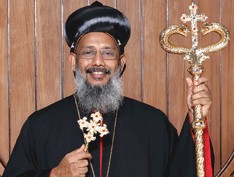
By H.G. Dr. Geevarghese Mar Theophilos Metropolitan
Metropolitan of Ahmedabad And Asst. Metropolitan of Mumbai Dioceses, Malankara Orthodox Church

\½psS IÀ¯mhnsâ ]oUm\p`h¯nsâ Znhk§fnð \mw Aht\mSv tNcphm\pw Ahsâ IjvSXbnð ]¦mfnIfmIphm\pw hnfn¡s¸«ncn¡póp. hnip² ]utemkv At¸mkvXe³ ]dbpóXpt]mse; "Ct¸mÄ Rm³ \n§Ä¡p thïnbpÅ Iãm\p`h§fnð kt´mjn¨p {InkvXphns³d Iã§fnð IpdhmbpÅXp Fs³d PU¯nð k`bmb Ahs³d icoc¯nóp thïn ]qcn¸n¡póp.' (sImsemÊyÀ 1:24) Fó B A\p`hw \½psS PohnX¯nepw DïmIphm\pw, AXpt]mse Xsó aqóp Znhk§Ä¡ptijw Ahsâ ]p\cp°m\¯nð kt´mjn¸m\pw FñmhÀ¡pw CSbmIs«.

HmÀ¯tUmIvkv ]mc¼cy¯nð Ipcnins\ hW§pIbpw _lpam\n¡pIbpw sN¿póXv hn{Klmcm[\ BsWópw; AXphgn tamibneqsS \ðIs¸« cïmas¯ Ið¸\bpsS ewL\amsWópw ]ecpw Bi¦ {]ISn¸n¡mdpïv. IpcnÈv \½sf kw_Ôn¨nSt¯mfw _lpam\s¸«Xpw, alXztadnbXpw, c£bpsS ASbmfhpw Hs¡bmWv. Fómð AXns\¡pdn¨v t_m[anñm¯hÀ¡pw, AXns\ kzoIcn¡m¯hÀ¡pw AXv t`mjXz¯nsâ Hcp ASbmfamWv; tXmðhnbpsS, ]cmPb¯nsâ ASbmfamWv. ]utemkv At¸mkvXe³ sImcn´nbÀs¡gpXnb Hómw teJ\w Hómas¯ A²ymb¯nð Xsó AXnt\¡pdn¨v cïp {]mhiyw ]dbpópïv. "{Iqins³d hN\w \in¨p t]mIpóhÀ¡p t`mjXzhpw c£n¡s¸Spó \apt¡m ssZhiànbpw BIpóp.' (1 sImcn´yÀ 1:18) {Iqinsâ hN\w AXp {IqimWv. {Iqins³d hN\w FóXv aÁpÅhÀ¡v AXv t`mjXzamWv. ]s£ \ap¡v AXv ssZhiànbmIpóp. 23þmw hmIy¯nð hoïpw At±lw ]dbpóp: "R§tfm {Iqin¡s¸« {InkvXphns\ {]kwKn¡póp;' (1 sImcn´yÀ 1:23) Ipcniv ImWpt¼mÄ \mw tbiphns\ ImWpóp.

tað D²cn¨ thZ`mK¯v hnip² ]utemkv DbÀs¯gptóÁh\mb {InkvXpshóñ; {Iqin¡s¸«h\mb {InkvXp FómWv ]dbpóXv. A§s\ ]dbphm³ Nne ASnØm\ ImcW§fpïv. ChnsS hnip² ]utemkv {]tXyIw ]cmaÀin¡póXv {Iqin¡s¸« {InkvXphns\¯sóbmWv. AhnsS IqSnbncpó blqZòmcpw bh\òmcpw tbiphns\ ]pÑn¨p; Ah³ {Iqin¡s¸«Xn\mð Ah³ At¼ Hcp ]cmPbambncpópshóv A`n{]mbs¸«p. Ah³ Nne AÛpX§Ä ImWn¨ncpópsh¦nepw, Ah³ ]etcbpw c£n¨pshóv AhImis¸«ncpópsh¦nepw, Ipcninð \nóv Xsó¯só c£n¸m³ Ah\p Ignªnñ Fóv AhÀ ]dªp. {IpipacWw IïpsImïncpóhcnð \nóv C¯c¯nepÅ Hcp s]mXphmb kwkmcw Dbcpópïmbncpóp. ]ecpw Ahs\ Ifnbm¡pIbpw ]pÑn¡bpw sNbvXp; {]tXyIn¨pw tdmam¡mÀ Ipcnins\ ZpjvSacW¯nsâ in£mhn[nbmbn IW¡m¡nbncpóXn\mð. C¯cw Hcp kµÀ`¯nð am{XamWv hnip² ]utemkv {Iqin¡s¸« tbiphns\ {]Jym]n¡póXv. hnizkn¡póhÀ¡v Ipcniv hnPb¯nsâbpw c£bpsSbpw ASbmfamsWópw, Ipcniv ImWpt¼mÄ \mw {IqinX\mb tbiphns\ ImWpópshópw ]utemkv At¸mkvXe³ Dd¸p hcp¯póp.

tbip Ipcninð acn¡psaóv ]dbpó hyàamb Hcp ]gb\nba {]hN\w Csñóv tXmópóp. Fóncpómepw, GZ\nse ac¯nð \nóv DÛhn¨ im]w Hcp hr£w Xsó \o¡w sN¿póXmbn \mw ImWpóp. GZ³ tXm«¯nse \Sphnse hr£w aqeapïmb ssZhtIm]w tKmKpð¯mbnð DbÀ¯nb Ipcninsâ hr£w tbip{InkvXphneqsS ]n³hen¡s¸Spóp. KemXyÀ 3:13þð ac¯nð Xq¡s¸« HcmÄ i]n¡s¸«h\msWó blqZ ]mc¼cys¯ hnip² ]utemkv ]cmaÀin¡póp. At±lw FgpXpóp: "ac¯ntòð Xq§póh³ Fñmw i]n¡s¸«h³' Fóp FgpXnbncn¡póXp t]mse {InkvXp \ap¡pthïn im]ambn¯oÀóp. \ymb{]amW¯ns³d im]¯nð \nóp \s½ hnse¡p hm§n. (KemXyÀ 3:13) BhÀ¯\]pkvXIw 21:22þð ImWpó ]gb \nbas¯bmWv ]utemkv D²cn¡póXv. eÖmIcamb Hcp acWw hcn¨psImïv Xsâ ]qÀ®amb A\pkcW¯neqsS tbip \ymb{]amW¯nsâ im]w kzbw FsÁSp¯p. Cu hymJym\w {]hÀ¯nIÄ 5:30þð ]t{Xmknsâ {]kwKhpambn tbmPn¡póp. "\n§Ä ac¯nð Xq¡ns¡mó tbiphns\ \½psS ]nXm¡òmcpsS ssZhw DbnÀ¸n¨p;' (As¸m: {]hr¯nIÄ 5:30)

AXpt]mse, A{_lmw tamdnb aebnð Xsâ aI³ bnkvlm¡ns\ _enbÀ¸n¡m³ t]mbt¸mÄ ac¯nð IpSp§nt¸mb Hcp B«psImÁsâ _en bnkvlm¡nsâ _en¡v ]Icam¡s¸«p; bnkvlm¡v c£s]«p. A{_lmw AhnsS Hcp bmK]oTw ]WnXp, hndIv \nc¯n, aI³ bnkvlm¡ns\ _Ôn¨p, hndIn\p apIfnð bmK]oT¯nð InS¯n. HSphnð, Hcp B«psImÁ³ IpÁn¡m«nð (Hcp hr£w/ IpÁns¨Sn) AXnsâ sIm¼pIfnð Ipcp§nbXns\ bnkvlm¡n\p ]Icw bmKw Ign¡m³ btlmhbmb ssZhw \nÀt±in¡póp. A§s\ Hcp hr£w bnkvlm¡n\v tamN\¯n\pÅ amÀ¤ambn hÀ¯n¨p. hmKvZ¯ ainlmsb ]cmaÀin¡pt¼mÄ A\p{KloX k´Xnbmb {InkvXphns\ \½psS Øm\¯v _enbÀ¸n¡s¸«p. Ahsâ acWw \ap¡v tamN\ambn¯oÀóp. AXn\mð, k`m]nXm¡òmÀ bnkvlm¡ns\ tbip{InkvXpsâ ap³\ngembn ImWpóp.

]gb\nba¯nse ]e {]hN\§fpw tbip{InkvXphnsâ ]oUm\p`ht¯bpw acWt¯bpw Ipdn¨v {]hNn¡póp.

  • k¦oÀ¯\w 22 (Psalm 22): {]hmNIòmcnepïmbncpó {InkvXphnsâ Bßmhv, ]gb\nba¯nse asÁhnsSbpw t]mse hyàambpw ]qÀ®ambpw Cu k¦oÀ¯\¯nð km£ys¸Sp¯póp. tbip{InkvXphnsâ IpcnipacW¯nsâ Hcp {]hN\ kw{Klambn 22þmw k¦oÀ¯\s¯ IW¡m¡mw. "{InkvXphnsâ IjvS¸mSpIfpw XpSÀópÅ alXzhpw" (1 ]s{Xmkv 1:11 þð ]dbpóXpt]mse) CXnse {][m\ {]Xn]mZyamWv. {]tXyIn¨pw {InkvXphnsâ ssIhnSensâ \nehnfn, ImgvN¡mcpsS ]cnlmkw, imcocnI ]oU\hpw £oWhpw, ssIImepIfnse Ip¯n¯pfbv¡ð, hkv{X¯n\mbpÅ ]SbmfnIfpsS No«nSoð Chsbñmw DÄs¸Spóp.

  • sbi¿mhv 50:4þ9 (Isaiah 50:4-9): "kln¡pó Zmk³' Fó \nebnð Xsâ ZuXyw \S¸m¡póXn\mbn Ah³ hnfn¡s¸« Fñm tkh\§Ä¡pw IogS§m\pÅ Ahsâ kz´w kó²Xsb FSp¯p ImWn¡póp. imcocnI ]oU\¯n\pw A]am\¯n\pw a\tÊmsS IogS§psaóv ap³Iq«n ]dbpóp. IqSmsX Ahs\ Ab¨ ssZhw Aht\msSm¸w \nð¡psaópÅ Dd¸nsâ hnImcs¯ kw{Kln¡póp. ASn¡póhÀ¡p, Rm³ Fs³d apXpIpw tcmaw ]dn¡póhÀ¡p Fs³d Ihnfpw ImWn¨psImSp¯p; Fs³d apJw \nsµ¡pw Xp¸enópw asd¨n«panñ. tbiphnsâ hnNmcWbnepw, {IqioIcW¯nepw A\p`hn¨ bmX\IfpsS {]hN\§fmWv Ch.

  • sbi¿mhv 54 (Isaiah 54): {InkvXphnsâ acWw k`bpsSbpw AXnð bYmÀ°¯nð DÄs¸«ncn¡pó Fñm¯nsâbpw Poh\mWv. AXn\mð {InkvXphnsâ IjvS¸mSpIÄ {]hmNI³ {]hNn¨Xn\ptijw, Ahsâ alXz¯nsâ `mKamb k`bpsS A`nhr²ntbbpw, Ahsâ A]am\¯nsâ {]Xn^eamb Ahsâ DbÀ¨tbbpw ap³Iq«n ]dbpóp. {InkvXphnsâ ]oUmkl\¯nsâ ^e§fmb ]p\xØm]\w, kam[m\ DS¼Sn, k`bpsS hnImkw Fónhbnð Duóð \ðIpóp. "kln¡pó Zmksâ' bmKw FXncmfnIfpsStað \nXy\oXnbpw kpc£nXXzhpw hnPbhpw sImïphcpsaóv hmKvZm\w sN¿póp.

  • skJcymhv 12:10þ14 (Zechariah 12:10–14): Ip¯napdn¡s¸« ainlmbpsS ]oU\§Ä Xo{hamb tZiob ZpxJ¯nte¡pw, am\km´c¯nte¡pw \bn¡psaópw ChnsS {]hNn¡póp. Rm³ ZmhoZvKrl¯ntòepw sbcpitew \nhmknIfpsStaepw Ir]bpsSbpw bmN\IfpsSbpw Bßmhns\ ]Icpw; X§Ä Ip¯o«pÅh¦te¡p AhÀ t\m¡pw; ZmhoZv `h\¯nsâ ]p\Øm]\amWv ChnsS FSp¯pImWn¡póXv.

  • CXp IqSmsX, IÀ¯mhmb tbip Xsó Xsâ ]cky ip{iqjbv¡nsS, Xm³ IjvSs¸SpIbpw, sImñs¸SpIbpw, alXz¯nte¡v DbÀ¯s¸SpIbpw sN¿psaóv ap³Iq«n ImWpIbpw Xsâ injyòmtcmSv ]dbpIbpw sNbvXp.

{InkvXym\nIsf kw_Ôn¨nSt¯mfw, Ipcniv alXzhð¡cn¡s¸«Xpw, hnetbdnbXpw BZcWnbhpamb Hcp {]XoIamWv. \½psS {]mÀ°\IÄ, hmb\IÄ, k`m]nXm¡òmcpsS ]Tn¸n¡epIÄ apXembhbpsS ASnØm\¯nð Ipcnint\¡pdn¨v [ym\n¡pt¼mÄ, Ipcnins\¡pdn¨pÅ \nch[n hntijW§Ä a\Ênem¡phm³ \ap¡v km[n¡pw.

  1. Ipcniv hnPb¯nsâ {]XoIamWv (The Cross is a Symbol of Victory):
    BZy a\pjy\mb BZmansâ ewL\w \nan¯w a\pjyhwi¯nð ]m]hpw acWhpw DÛhn¨p. Fóncpómepw, Ipcninse acW¯neqsS IÀ¯mhmb tbip ]m]¯nsâbpw, km¯msâbpw, acW¯nsâbpw tað hnPbw t\Sn. ssIkcy ^nen¸nbnð Bbncn¡pt¼mÄ tbip hcm\ncn¡pó Xsâ acWs¯¡pdn¨v injyòmtcmSv kwkmcn¡pt¼mÄ, tbiphns\ ainlmbmbpw ssZh]p{X\mbpw Iïv GÁp]dª AtX ]t{Xmkv, IÀ¯mhn\v AXp (acWw) kw`hn¡cpsXóv ]dªv Ahs\ DZvt_m[n¸n¨p. tbip DS³Xsó ]t{Xmkns\ imkn¨p; km¯m³ Fóp hnfn¨p. ]t{Xmknsâ B´cnIhpw euInIhpamb Nn´ tbip acn¡cpXv, adn¨v Hcp `uanI cmPmhmbn XpScWw FóXmbncpópshóv \mw ChnsS ImWpóp. Fómð Ipcninse bmK¯neqsS ]m]¯nsâbpw acW¯nsâbpw km¯msâbpw tað hnPbw hcn¡m³ Cu temI¯nte¡v Ab¡s¸«Xn\m³ tbip Ahs\ D]tZin¨p. tbip \nÊlmb\mb Hcp Ccbmbncpónñ; adn¨v, Ah³ Hcp tPXmhmbncpóp. acW¯mð IogS¡s¸SpóXn\v ]Icw, a\tÊmsS Ah³ Xsâ Poh³ XyPn¡pIbpw, AXntòð hnPbw t\SpIbpw sNbvXp.

  2. Ipcniv Pohhr£amWv (The Cross is the Tree of Life):
    Ipcniv GZ³ tXm«¯nse Pohhr£¯n\v ]Icambn¯oÀóp. ]m]w sNbvXXn\ptijw BZmapw lÆmbpw GZ³ tXm«¯nð \nóv ]pd¯m¡s¸«p. a\pjy³ ssI \o«mXncn¡m\pw, Pohhr£¯nsâ ^ew ]dn¨v Xnóv, Ftó¡pw Pohn¡mXncn¡m\pw, Pnhhr£¯nte¡pÅ hgn Im¡m³ sIcq_pIfpw Fñm Znibnte¡pw Xncnbpó Hcp Pzen¡pó hmfpw GÀ¸mSm¡n. s]klm s]cq\mfnsâ Bcm[\bnð, GZ\nð BZmw cpNn t\m¡m¯ Poh^eamWv tbip Fóv \mw ]mSpópïv.

  3. Ipcniv kzÀ¤¯nte¡p \ofpó Hcp tKmhWnbmWv (The Cross is a ladder extending to heaven):
    a\pjy³ Hcn¡ð ]dpZokbnð \nóv ]pd¯m¡s¸«psh¦nepw, Ct¸mÄ Ah³ IpcnineqsS hoïpw ]dpZokbpsS A\p`hw t\Spóp. AXn\mð Ipcnsió tKmhWnbneqsS \mw hoïpw ]dpZokmbnte¡v {]thin¡póp.

  4. Ipcniv km¯ms\XnscbpÅ Hcp Bbp[amWv (The Cross is a weapon against Satan):
    \½psS henb t\m¼pIme {]mÀ°\Ifnð Ipcniv km¯ms\Xncmb kam[m\]camb {]Xntcm[ambncn¡Wsaóv \½Ä BhÀ¯n¨v {]mÀ°n¡póp. tbiphnsâ acWs¯ km¯m³ icn¡pw `bs¸«ncpóp; AXn\mð, tbip acn¨ Ipcniv km¯msâ t]Snkz]v\amWv.

  5. Ipcniv Aán \Zn¡v IpdpsIbpÅ Hcp ]meamWv (The Cross is a bridge over the river of fire):
    I¯pó Aán \Zn apdn¨p IS¡m³ Ipcnsió ]mew klmbamIpóXmbn HmÀ¯tUmIvkv ihkwkvImc ip{iqjbpsS \memw s{]mantbm\nð hyàambn ]cmaÀin¨n«pïv. Bßmhnsâ acWm\´capÅ bm{XbpsS HmÀ¯tUmIvkv ssZhimkv{X]camb ImgvN¸mSns\bmWv CXv kqNn¸n¡póXv.

  6. Ipcniv kam[m\¯nsâ {]XoIamWv (The Cross is a symbol of peace):
    kzÀ¤Ø\mb ]nXmhns\bpw `qanbnse a\pjy hÀ¤t¯bpw Hón¸n¡pó Hcp am[yaamWv Ipcniv. i{XpXbpsS aXnð XIÀ¡póXmbn hnip² ]utemkv CXns\ hntijn¸n¡póp. AXpsImïmWv k`m ]nXm¡òmÀ Ipcnins\ kam[m\¯nsâ {]XoIambn ]dbpóXv.

  7. Ipcniv Hcp A`bØm\hpw kt¦XhpamWv (The Cross is a refuge and sanctuary):
    \½Ä _p²nap«pIÄ t\cnSpt¼msgñmw, Bizmk¯n\pw A`b¯n\pambn Ipcnins\bmWv kao]n¡póXv. Ipcninse tbiphnsâ Zriykmón²yw \ap¡v kpc£nXXzhpw ss[cyhpw \ðIpóp.

  8. Ipcniv D²nX\mb {InkvXphnsâ ASbmfamWv (The Cross is the sign of the risen Christ):
    AXv shdpw Iñnð \nÀ½n¨Xmbmepw XSnbnð \nÀ½n¨Xmbmepw asÁ´p hkvXp¡Ä sImïv \nÀ½n¨Xmbmepw Ipcniv Poh\pw ssNX\yhpw DÅXmWv. Ipcniv Hcp IncoSamsWóv k`m ]nXm¡òmÀ \s½ ]Tn¸n¡póp.

btlmhbmb ssZhw tamibv¡v ]¯p Ið¸\IÄ \ðIn. BZys¯ cïv Ið]\IÄ ChbmWv: "Rm\ñmsX A\yssZh§Ä \n\¡p DïmIcpXp. Hcp hn{Klw Dïm¡cpXp; aosX kzÀ¤¯nð F¦nepw Xmsg `qanbnð F¦nepw `qan¡pIosg shff¯nð F¦nepw Dff bmsXmóns³dbpw {]Xnabpw AcpXp.' ]ecpw tNmZn¡mdpïv: "Ipcnip hµ\ hn{Klmcm[\btñ?' Fómð \ap¡v AhtcmSv ]dbm\pÅXv C{]ImcamWv. btlmhbmb ssZhw tamitbmSv Ið¸n¡póp, "Rm³ AhcpsS \Sphnð hkn¸m³ \o Hcp kamKa\ IqSmcw (hnip²aµncw) Dïmt¡Ww, JZncacwsImïp Hcp s]«Iw Dïmt¡Ww; AXpIqSmsX, X¦wsImïp Ir]mk\w Dïmt¡Ww; s]mópsImïp cïp sIcq_pIsf Dïmt¡Ww; Ir]mk\s¯ s]«I¯nòosX sht¡Ww;' AXpt]mseXsó itemtam³ cmPmhv tZhmebw ]Wnbpt¼mÄ AXv F§s\ Bbncn¡Wsaóv Ið¸n¨Xpw btlmhbmb ssZhamWv. tbcpitew tZhmeb¯nsâ A´À½µnc¯nð Ah³ HenhpacwsImïp ]¯papgw Dbcapff cïp sIcq_pIsfbpw Dïm¡m³ itemtamt\mSv Ið¸n¨p. bn{kmtbð P\§Ä AánkÀ¸§fpsS ISntbÁp acn¡pt¼mÄ, tamisbs¡mïv, Xm{awsImïp Hcp kÀ¸s¯ Dïm¡n, ]mfb¯nsâ \Sphnð sImSnac¯ntòð Xq¡n, AXns\ t\m¡n c£s]Sm³ Ið¸n¨Xpw btlmhbmb ssZhamWv. Npcp¡¯nð, ssZh¯n\v ]Icw ImWpó HómWv hn{Klw. Fómð Ipcninð, tbip{InkvXphnsâ kmón²yamWv (Visible presence) \mw ImWpóXv; Ipcniv ssZh¯n\v ]Icañ.

k`bv¡v kzmX{´yw e`n¨Xn\ptijw, \memw \qÁmïnemWv Ipcninsâ Bcm[\ Bcw`n¨Xv. AXn\pap¼v, Ipcniv ]ckyambn Xpdóp Im«póXn\p ]Icw, {InkvXym\nIÄ ]et¸mgpw aÕy NnÓamWv D]tbmKn¨ncpóXv. tIm¬kvÁssâ³ N{IhÀ¯n kzmX{´yw {]Jym]n¨Xn\ptijw, Ipcniv c£bpsS {]XoIambn IW¡m¡s¸«ncpóp. sleo\m cmPvRn tbiphnsâ Ipcniv Ipgns¨Sp¯Xns\¡pdn¨v \ap¡dnbmw. kvs]bn\nð \nópÅ FtKdnb (Asñ¦nð FXocnb) Fó kv{Xo t\m¼pIme¯v ]oUm\p`h hmc¯nð hnip² \mSv (tbcpitew) kµÀin¨p. FtKdnbmbpsS XoÀ°mS\ bm{X Fó bm{Xm hnhcW {KÙ¯nð Xsâ kµÀi\¯nsâ hniZmwi§Ä \ðIpópïv. F.Un. 300 \pw 400 \pw CSbnð tbcpiteanse tKmðtKmYbnse tZhmeb¯nð, Hcp _nj¸v Xsâ ssIIfnð IÀ¯mhnsâ Ipcniv DbÀ¯nbncpóXmbpw hnizmknIÄ hóv Ipcnin\v ap¼nð hW§nbncpóXmbpw AhÀ Cu ]pkvXI¯nð ]cmaÀin¡pópïv. ]nóoSv Ipcninsâ Imhen\mbn cïv si½miòmÀ Ipcninsâ Ccphi¯pw \nóncpóXmbpw ]dbpópïv. Aóp apXð Ipcninsâ Bcm[\ \ne\nóncpópshóv Cu kw`hw ØncoIcn¡póp.

Cu ZpxJshÅnbmgvN tbip{InkvXphnsâ IjvS¸mSpIfnð ]¦ptNcm³ \mw Ah\nte¡v ASp¡pt¼mÄ, Hcp Imcyw IqSn \n§fpsS {i²bnð s]Sp¯ns¡mïmWv Fsâ hm¡pIÄ Ahkm\n¸n¡m³ Rm³ B{Kln¡póXv.

{]obapÅhtc, `mcX¯nse k` hfsc `mKyhXnbmWv. Cóphsc, \ap¡v Imcyamb ]oU\§tfm _p²nap«pItfm t\cntSïn hón«nñ, Fóncpómepw, aÁv ]e k`Ifpw, {]tXyIn¨v BZyIme \qÁmïpIfnð {InkvXy³ iàntI{µ§fmbncpó ]Ýntajybnse k`Ifnð, aÁp aX§Ä {]_eambn amdnb Hcp amÁw A\p`hs¸«n«psïóv \ap¡dnbmw. AhnsS hnizmknIÄ HópInð \nÀ_ÔnXambn aX]cnhÀ¯\w sN¿s¸SpItbm, ]emb\w sN¿pItbm, Asñ¦nð sImñs¸SpItbm, càkm£nIfmIpItbm sNbvXn«pïv. IÀ¯mhnsâ ]oU\§fnepw {]bmk§fnepw \mw ]¦ptNcpt¼mÄ, \ap¡v ]oU\§fnepw {]bmk§fnepw t\cntSïn hcpt¼mÄ \mw ]nòmdcpsXóv \s½¯só HmÀ½n¸n¡Ww.

Cu ImeL«¯nð `mcX¯nse k`IÄ \nch[n shñphnfnIsf t\cnSm³ kÖambncn¡Wsaóv HmÀ½n¸n¡phm³ Rm³ B{Kln¡póp. CXc hnizmk§fnð \ntóm cmjv{Sob A[nImcnIfnð \ntóm ]eXcw _p²nap«pIÄ t\cntSïn htó¡mw. GXv {]XnkÔn L«¯nepw, \n§fpw Rm\pw {InkvXphn\pthïn km£yw hln¡m³ X¿mdmbncn¡Ww. k`bpsS kpc£nXXz¯n\pÅnð \mw kpJambn Ccn¡cpXv. ITn\amb Znhk§Ä hcpt¼mÄ {InkvXphns\ GÁp]dbphm\pw km£nIÄ BIm\pw \ap¡v IgnbWw. A¯cw Imcy§Ä¡pÅ kabw GÁhpw ASp¯ncn¡póp. \½psS \mSmb tIcf¯nð t]mepw {]tXyIn¨v hSs¡ C´ybnð \ap¡v _p²nap«pIÄ t\cntSïn htó¡mw.

AXpsImïv, {InkvXphnsâ ]oUm\p`h¯nð Ah\pthïn bYmÀ°ambn IjvSs¸Sm³ \s½¯só Hcp¡m³ \ap¡v ]cn{ian¡mw Fóv HmÀ¸n¨psImïv Fsâ hm¡pIÄ Ahkm\n¸n¡póp. ssZhw \s½ A\p{Kln¡s«.

GOOD FRIDAY - GLORIFICATION ON THE CROSS

During the passion of our Lord Jesus Christ, we are called to join in His suffering. As the Apostle Paul said, we must fill up in our own bodies what is still lacking in Christ's afflictions for the sake of His body, which is the Church (Colossians 1:24). By experiencing this suffering, we unite ourselves intimately with Him. Let us share in His sufferings and eventually rejoice in His resurrection after three days; may God grant us this blessing.

Many people express concern that venerating and respecting the Cross in Orthodox tradition, constitutes idolatry, thereby violating the Second Commandment given through Moses. However, from our perspective, the Cross is deeply respected as a glorious symbol of salvation. Conversely, for those who despise and denounce it, the Cross is viewed as a symbol of foolishness, failure, and condemnation.

St. Paul mentions the message of the Cross in his epistle, notably stating: "For the word of the cross is foolishness to those who are perishing, but to us who are being saved it is the power of God" (1 Corinthians 1:18). In this context, the "word of the Cross" refers to the message of the Cross or Cross itself. Paul further adds, "but we preach Christ crucified, to Jews a stumbling block and to Gentiles foolishness" (1 Corinthians 1:23).

Here, St. Paul specifically mentions that we preach Christ crucified, because this passage is not about the resurrected Christ. There is an underlying reason for referring to Him as the crucified Christ. The Jews and Greeks there were despising Jesus, saying that He was a failure because He was crucified. Although He had shown some miracles and it was claimed that He saved many, they said He could not save Himself from the cross. This type of common talk was heard from many who were watching the crucifixion. Many people teased and despised Him, especially as the cross was considered by the Romans to be a condemned way of wicked death. Only in this context does Paul declare the crucified Christ, and that the Cross is a symbol of victory and salvation for those who believe. When we see the cross, we see Jesus.

It appears there is no explicit Old Testament prophecy stating that Jesus would die by crucifixion. However, the curse originating from the tree in Eden is removed by a tree itself. The curse caused in the Garden of Eden by the tree is withdrawn by the tree of the cross raised on Golgotha, through Jesus Christ. In Galatians 3:13, St. Paul refers to the Jewish tradition that a person hanged on a tree is cursed. He writes, "Christ redeemed us from the curse of the law by becoming a curse for us - for it is written, 'Cursed is everyone who is hanged on a tree'." Paul is citing the Old Testament law found in Deuteronomy 21:23. Jesus took upon Himself the curse of the law through His perfect obedience by dying a shameful death. This interpretation aligns with Peter's speech in Acts 5:30, where he mentions Jesus being hanged on a tree.

In the same manner, when Abraham went to sacrifice his son Isaac on Mount Moriah, Isaac was saved by a tree in which a ram, provided for the sacrifice, was entangled. Abraham built the altar there, arranged the wood, bound his son Isaac, and laid him on the altar on top of the wood. Eventually, Isaac was rescued because a ram was caught in a thicket (a tree/shrub) by its horns. Thus, a tree served as the means of deliverance for Isaac. Reference must be made to the promised Messiah: the blessed seed, Christ, was sacrificed in our stead, just as this ram was sacrificed instead of Isaac, and his death was our release. Therefore, Church fathers view Isaac as a foreshadowing (or type) of Jesus Christ.

Many Old Testament prophecies foretell the passion and death of Jesus Christ.

  • Psalm 22 acts as a prophetic summary of the crucifixion: detail the agony of the crucifixion itself, further describe the resulting victory. Specifically prophecies it include Christ’s cry of abandonment, mockery by onlookers, physical torment and exhaustion, the piercing of his hands and feet, and the soldiers casting lots for his clothing.

  • Isaiah 50:4-9 summarizes the passion by foretelling the "Suffering Servant’s" willing submission to physical abuse, humiliation, and mockery. This passage specifically highlights the beating, scourging, and plucking of his beard, mirroring Jesus' suffering during His trial and crucifixion.

  • Isaiah 54 outlines the results of Christ's death and passion, focusing on the restoration, covenant of peace, and expansion of the church. It describes the shift from suffering to comfort, promising that the "Suffering Servant's" sacrifice brings eternal righteousness, security, and victory over adversaries.

  • Zechariah 12:10–14 prophesies the death of Christ by predicting that the Messiah would be "pierced" by his own people, leading to intense national mourning and repentance. It highlights the crucifixion (piercing), the specific mourning for an only son (Jesus), and the eventual recognition of Him by the house of David.

  • In addition, the Lord Jesus Himself foresaw and told His disciples during His public ministry that He was to suffer, be killed, and be elevated into glory.

For Christians, the Cross is a glorified, valuable, and honorable symbol. When meditating on the Cross according to our prayers, readings, and the teachings of our Church Fathers, we ascribe to it many distinct aspects.

  1. The Cross is a Symbol of Victory:
    Due to the transgression of the first man, Adam, sin and death originated within the human race. However, through His death on the Cross, Jesus gained victory over sin, Satan, and death. When Jesus spoke of His impending death while in Caesarea Philippi, Simon Peter, who had witnessed Jesus as the Son of God and Messiah, rebuked Him, saying this should not happen. Jesus immediately reprimanded Peter, calling him "Satan". We notice here that Peter’s inner, worldly thought was that Jesus should not die, but rather continue as an earthly king. Yet, Jesus admonished him because He was sent to this world to be victorious over sin, Satan, and death through the sacrifice on the cross. Jesus was not a helpless victim; on the contrary, He was a conqueror. Rather than being overcome by death, He willingly laid down His life and triumphed over it.

  2. The Cross is the Tree of Life:
    It served as a substitute for the Tree of Life in Eden. After sin was committed, Adam and Eve were expelled from the Garden of Eden. Cherubim and a flaming sword, which turned in every direction, were stationed to guard the way to the Tree of Life, so that man might not stretch out his hand, take from the Tree of Life, eat, and live forever. During Pesaha (Passover), we sing that Jesus was the Fruit of Life which Adam could not taste in Eden.

  3. The Cross is a ladder extending to heaven:
    Just as man was once expelled from Paradise, he now gains the experience of Paradise again through the Cross. Therefore, we re-enter Paradise by means of this ladder of the Cross.

  4. The Cross is a weapon against Satan:
    In our Great Lent prayers, we repeatedly pray for the Cross to be a peaceful defense against Satan. Satan truly feared the death of Jesus; therefore, the Cross on which Jesus died is the nightmare of Satan.

  5. The Cross is a bridge over the river of fire:
    It is clearly mentioned in the fourth Premeon of the Orthodox burial service that the bridge of the Cross is utilized to cross the river of burning fire. This refers to the Orthodox theological imagery of the soul's journey after death.

  6. The Cross is a symbol of peace:
    It is a symbol that unites the Father in heaven with humanity on earth. St. Paul speaks of it as the breaking down of the wall of enmity. That is why our Church father say of Cross as symbol of peace.

  7. The Cross is a refuge and sanctuary:
    Whenever we face hardships, we immediately run to the cross for solace and shelter. It provides us with security and courage because we behold the visible presence of Jesus upon it.

  8. The Cross is the sign of the risen Christ:
    Whether it is made of stone, wood, or any other material, the cross possesses life and spirit. The Church Fathers teach us that the Cross is a crown.

Yahweh God gave Moses the Ten Commandments. The first two commandments are: "I am Yahweh your God," and "You shall have no other Gods before me. You shall not make for yourself any image, nor anything in the heaven above or on the earth below, nor in the water under the earth [to worship them]." Regarding this, many people ask: "Is veneration of the cross not idolatry?" Here is what I have to tell them: Yahweh Himself commanded Moses to make a tabernacle for meeting and an ark made of cedar/acacia wood. Furthermore, He commanded him to make a mercy seat (krupasanam) with pure gold and two cherubim made of gold to be installed in the middle of the tabernacle. Also, God told Solomon to build the temple, and explained to him how to build it, including two cherubim covering the mercy seat. These were all commanded by the same God, Yahweh. When the people were bitten by the fire-serpents and were dying, God said to make a serpent of brass and lift it up in the middle of the camp; whoever looked at it would be saved. This was also told by God Yahweh. In short, an idol is something one sees instead of God, but in the cross, we see the visible presence of Jesus Christ.

Veneration of the Cross commenced in the fourth century, after the Church obtained freedom. Before that, rather than openly exposing the cross, Christians often used the fish symbol instead. After freedom was declared by Emperor Constantine, the cross was considered the symbol of salvation. We know of the excavation of the Cross of Jesus by Queen Helena. A woman named Egeria (or Etheria) from Spain visited the Holy Land during Lent and Passion Week, and she was in Jerusalem. She wrote a description of her journey in a travelogue known as The Travel of Egeria (or Pilgrimage of Egeria). In this book, she mentions that in the fourth century (between 300 and 400 AD), at the temple in Jerusalem at Golgotha, a bishop raised the Lord's Cross in his hands, and the faithful came and bowed before the cross. Later, two deacons stood on both sides of the cross to guard it. This event confirms that the veneration of the cross was in practice from that time.

As we draw close to Jesus Christ on Good Friday to partake in His suffering, I would like to conclude my words by bringing one more matter to your attention.

Dear friends, the Church in India is very fortunate. To this day, we have not faced significant persecution or hardship. However, we know that many other churches, particularly those in West Asia, which were once Christian strongholds from the early centuries, have experienced a shift where other religions have become predominant. There, believers have either been forced to convert, fled, or were murdered and became martyrs. When we participate in the suffering of the Lord, we must remind ourselves that we should not shrink away when faced with persecution and hardship.

I want to remind you that the Church in India must be prepared to face many challenges during this period. We may have to encounter various types of difficulties, perhaps from other religions or from political authorities. Such crises are going to occur in our lives. During any crisis, you and I must be ready to witness for Christ. We should not sit comfortably within the safety of the church; we must be able to confess Christ and be witnesses when harsh days press against us. We understand that the time for such things is near. We may have to face various difficulties, even in our own land of Kerala, not to mention in North India.

Therefore, the suffering of Christ should compel us to prepare ourselves to truly suffer for Him. I conclude my words. May God bless you.

(If you liked the Article please share it with your friends, subscribe for Updates or Send your Feedback clicking button below]
FeedbackSubscribe for EMail Updates / Send Feedback

Series 2 - Feast of Pesaha Series 4 - Easter Sunday
MORE ARTICLES OF THE SAME AUTHOR


A KIND NOTE TO BLESSED READERS
Now most of the Articles are converted to read on your Mobile Phone, rest are in process. If you would like to read Light of Life Articles frequently please add an ICON on your Home Screen as per the steps given below. (Please do it only once to avoid multiple icons on your home screen)

FOR ANDROID
  1. Open Chrome Browser
  2. Write URL LightofLife.com on URL Bar
  3. Tap Browser's menu icon (three dots or the hamburger menu three line on right-top).
  4. Select "Add to Home Screen" or Add Page To -> Home Screen"
  5. Name the Shortcut as "Light of Life" or "LOL"
  6. Tap "Add to place the Icon on your Home Screen.
FOR IOS (IPHONE)
  1. Open Safari (or your preferred browser).
  2. Write URL LightofLife.com on URL Bar.
  3. Tap the Share button (a square with an arrow pointing up).
  4. Scroll down and select "Add to Home Screen"
  5. Give the link a name for your Home scrren Icon "Light of Life" or "LOL"
  6. Tap "Add" in the upper-right corner to confirn
SITE MAP

ARTICLES AND SERMONS OF CHURCH FATHERS

ARTICLES AND SERMONS OF OTHER AUTHORS

ARTICLES IN CHRISTIAN EDUCATION OF EARLY CENTURIES

SHORT BIOGRAPHIES OF CHURCH FATHERS


Back Home Top
INDIAN CHRISTIAN WEB DIRECTORY [LINKS]
[ ECUMENICAL ] [ ORTHODOX ] [ MARTHOMA ] [ JACOBITE ] [ CATHOLIC ] [ CSI ] [ ORGANIZATIONS ] [ NEWS ] [ MALAYALAM ]
THE CHRISTIAN
LIGHT OF LIFE